
Uttar Pradesh Chief Minister Yogi Adityanath announced the state's ambitious shift from mobile phone assembly to advanced microchip manufacturing, data centres, and artificial intelligence. He highlighted significant investments and growth in the digital economy, attributing the transformation to the "double-engine government's" alignment with national initiatives like 'Make in India' and 'Aatmanirbhar Bharat'. Adityanath also criticised previous administrations for hindering the state's potential.

Senior Indian officials highlight the indispensable role of the private sector in translating India-US cooperation in AI, semiconductors, quantum technologies, and critical minerals into tangible outcomes. The collaboration aims to build trusted, resilient technology ecosystems and position India as a global electronics and semiconductor hub.
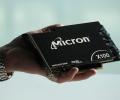
Prime Minister Narendra Modi inaugurated Micron Technology's semiconductor plant in Sanand, Gujarat, highlighting India's growing presence in the hardware sector and its strong partnership with the United States in AI and chip technologies.
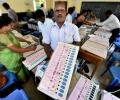
To counter the doubts over the machine's reliability, the Election Commission has come out with a list of FAQs to put across its views in public domain.

We no longer have the ambition to rival China save through words. We are happy to be fighting ourselves and digging up disputes from centuries ago as a substitute for real development, argues Aakar Patel.
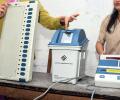
The Supreme Court of India has sought a response from the Election Commission of India (ECI) regarding pleas seeking verification of burnt memory and symbol loading units in Electronic Voting Machines (EVMs). The court directed the ECI to refrain from erasing or reloading data during the verification process and to explain the procedure adopted for verification. The bench also expressed concerns over the high cost of verification and directed the ECI to reduce the fee. The court's directive comes following its previous judgement where it allowed aggrieved candidates to seek verification of EVMs.
Mining mogul Anil Agarwal-led Vedanta Resources' credit profile will unlikely be weighed down by the group's planned Rs 1.54 lakh crore foray into semiconductor manufacturing, S&P Global Ratings said on Monday. "This is because the company has reiterated that the $20 billion related investment will be carried out outside of Vedanta Resources. "The business will be undertaken in a separate entity under Vedanta Resources' holding company Volcan Investments Ltd," it said.
Foundries in Taiwan account for more than 75 per cent of the chips that mobile devices made in India need, according to estimates by the Indian Cellular and Electronics Association (ICEA), which represents global and domestic manufacturers. The number is slightly lower, 60 per cent, if one considers all chips -- those of consumer electronics, PCs, laptops, autos, etc. This ties in with the fact that foundries in Taiwan, led by TSMC, account for over 70 per cent of the world's microchip supply, according to estimates by Gartner.

In a post on X, Modi said, "Happy to have welcomed @POTUS @JoeBiden to 7, Lok Kalyan Marg. Our meeting was very productive."
Leading microchip providers Qualcomm and Intel say the chip shortage might last anything between four months to a year, perhaps even two years, depending on the various product categories - mobile devices, ICE, electric vehicles, appliances, data centres. Prakash Mallya, MD, Intel India and vice president, sales and marketing and communications group, said the spike in demand was huge, and cut across segments from PCs, phones, appliances and auto leading to the shortage.

Ola Electric is moving the delivery for the first batch of its electric scooters to between December 15 to the end of the month, a two- to four-week delay from its earlier schedule, due to a shortage of chipsets and electronic parts. The first batch of deliveries were scheduled for November 30 but the company decided to delay them after a meeting between its factory team and the global supply chain on Saturday. It became clear that the late delivery of chips and electronic parts was only 'getting worse', sources told Business Standard. Ola has apologised to customers for the delay and said it is "ramping up production as fast as we can so that you can get your Ola S1 at the earliest". It has stopped taking any new bookings until the chip shortage has eased, say sources.

The Tata group flagship has sold more sport utility vehicles (SUVs) in the domestic PV market in the past four months than any other automotive manufacturer, cementing its no.1 spot. It first grabbed pole position in the SUV segment in October 2021 after the launch of the Punch - a sub-compact SUV offering.

'Ensuring through diplomatic means and in conjunction with strategic partners that India will not be required to fight a simultaneous two-front war with China and Pakistan.' Brigadier Gurmeet Kanwal (retd) lists what India must have in its national security strategy.

A simple guide to find out India's best commuters, from among Bajaj CT 100, Hero MotoCorp HF-Dawn, TVS Sport, Yamaha Crux and Mahindra Pantero T4.

While chips have become ubiquitous, Moore's Law has remained a self-fulfilling prophecy even half a century later. Not bad for an industry where the time scale is not measured in decades and centuries, but in annual quarters, says Shivanand Kanavi.
